

Pick-and-Place Machines Play in PCB Board Assembly Manufacturing
When you make a custom Printed Circuit Board (PCB), the process has come a long way over time. New techniques and technologies have enabled PCB assembly to be faster and easier than ever before. This makes creating powerful and cost-efficient products possible. One of the most critical pieces of equipment in this process is a pick-and-place machine.
These machines help to eliminate human error and provide high quality, reliable electronic devices that consumers can trust. They help to ensure that all of the individual components are properly placed on a bare PCB, giving them the power and functionality that they need to work together.
When it comes to picking and placing pcb board assembly manufacturing, there are many different types of machinery available. Some are built for speed while others offer more flexibility. It’s important to understand your own manufacturing requirements before selecting the type of pick and place machine that’s right for you.
Most pick-and-place machines feature a hopper with a variety of feeders, each designed to hold a specific type of component and then deliver them to the machine’s head. These machines can be programmed to handle a multitude of sizes, movements and specifications for each part, making them incredibly flexible. They can also be used for odd-form parts and even conductive plastics that are typically hard to use with traditional manual or automatic processes.
The nozzles on these machines can move vertically, horizontally and laterally to reach any point on a bare PCB. They can then add a variety of surface-mount components to the board, including resistors, capacitors, diodes and ICs. They can also add larger through-hole components with a through-hole inserter, if needed.
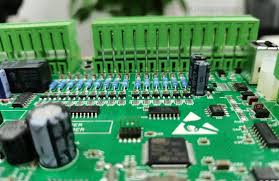
What Role Do Pick-and-Place Machines Play in PCB Board Assembly Manufacturing?
Once all the components have been added to the bare board, it’s time for soldering. A metal alloy, known as solder, is melted onto the board to establish a solid bond between the components and the PCB. This step is usually done through a process called wave soldering for through-hole components and reflow soldering for surface-mount devices.
While these machines can take over the majority of labor-intensive SMT tasks, they’re not meant to replace humans completely. Instead, they help to reduce the amount of tedious manual labor that needs to be done by hand and free up workers to focus on other tasks. This helps to boost productivity and create better working conditions for employees.
What’s more, these systems can operate at a much higher rate than human operators, helping to produce a high volume of boards quickly. This not only cuts down on production costs, but it allows manufacturers to make higher-level PCBs that weren’t possible with previous technologies.
There’s no doubt that pick-and-place machines are an essential tool in pcb board assembly. These advanced machines enable producers to create high-quality electronic devices that are more powerful and effective than ever before. By reducing the need for manual labor, these machines allow manufacturers to reduce their overall production costs and improve their competitive edge in the marketplace.