

driving PCB manufacturing
The field of PCB (Printed Circuit Board) manufacturing is experiencing a transformative period driven by rapid technological advancements and changing market demands. Innovations in design, materials, production processes, and automation are reshaping the landscape, enabling manufacturers to produce more efficient, reliable, and complex PCBs. This article explores the key innovations that are propelling PCB manufacturing forward.
One of the most significant innovations in pcb manufacturing is the development of advanced materials. Traditional materials like FR-4 are being supplemented or replaced by high-performance substrates, such as polyimide and liquid crystal polymer (LCP), which offer superior thermal stability, flexibility, and signal integrity. These materials are crucial for high-frequency applications, such as 5G technology and aerospace electronics, where performance and reliability are paramount. Additionally, the introduction of environmentally friendly materials, such as lead-free solder and halogen-free laminates, is addressing regulatory concerns and promoting sustainability in the industry.
High-Density Interconnect (HDI) technology and microvia production are revolutionizing PCB design and functionality. HDI PCBs allow for a higher density of connections in a smaller footprint, enabling manufacturers to create more compact and complex electronic devices. The use of microvias—small-diameter vias that connect layers of the PCB—enhances design flexibility and improves electrical performance. This innovation is particularly valuable for industries requiring miniaturization, such as consumer electronics, medical devices, and automotive applications.
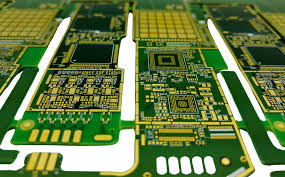
What innovations are driving PCB manufacturing forward?
Additive manufacturing, commonly known as 3D printing, is making waves in PCB manufacturing by offering unprecedented design flexibility and reducing waste. This innovative approach allows manufacturers to create intricate designs that are difficult or impossible to achieve using traditional subtractive methods. With additive manufacturing, PCB features can be directly printed onto the substrate, enabling rapid prototyping and customization. This technology not only accelerates the design process but also facilitates the production of specialized PCBs for niche applications, driving innovation across various industries.
The integration of automation and robotics in PCB manufacturing processes is another significant innovation. Automated pick-and-place machines, soldering robots, and inspection systems enhance efficiency, consistency, and accuracy in production. Automation reduces the likelihood of human error, leading to higher quality outputs and shorter lead times. Furthermore, advanced robotics can operate around the clock, increasing production capacity and allowing manufacturers to meet the growing demand for PCBs without compromising quality.
The Internet of Things (IoT) is playing a pivotal role in transforming PCB manufacturing into a more connected and efficient process. Smart manufacturing technologies enable real-time monitoring of production lines, allowing manufacturers to track performance, identify bottlenecks, and make data-driven decisions. IoT sensors can provide insights into equipment health, inventory levels, and process efficiency, leading to predictive maintenance and reduced downtime. This data-driven approach fosters continuous improvement and enhances overall operational efficiency.
Digital twin technology is emerging as a powerful tool in PCB manufacturing. A digital twin is a virtual representation of a physical PCB manufacturing process, allowing engineers to simulate, analyze, and optimize production before implementing changes in the physical environment. By utilizing digital twins, manufacturers can identify potential issues, optimize workflows, and improve design accuracy, ultimately reducing development time and costs. This technology enables a proactive approach to manufacturing, fostering innovation and adaptability.
Innovations in testing and quality control are also driving advancements in PCB manufacturing. Advanced inspection technologies, such as X-ray inspection and machine learning algorithms, are being employed to identify defects at earlier stages of production. These technologies provide manufacturers with greater insights into product quality, allowing for more efficient problem-solving and reducing the likelihood of defective products reaching customers. Improved testing methods ensure that PCBs meet rigorous quality standards, enhancing customer trust and satisfaction.
In conclusion, the future of PCB manufacturing is being shaped by a multitude of innovations across various domains, including materials, design, automation, and quality control. As manufacturers continue to adopt advanced technologies and processes, they will be better equipped to meet the evolving demands of the electronics industry. By embracing these innovations, PCB manufacturers can enhance efficiency, improve product quality, and foster sustainability, positioning themselves for success in an increasingly competitive marketplace.