

Industry Standards Impact Flex Circuit Manufacturers
The manufacturing of flex circuits is an intricate process that utilizes various materials and components. These include conductors, insulators and adhesives. Conductors allow electrical current to flow through the flex PCB while insulators and adhesives separate the conductors from each other. They also act as support for the conductors. Conductors are usually etched in metals such as copper or aluminum while insulators can be made of polyimide, solder mask or epoxy.
Generally, the circuit traces on the flex circuit manufacturer are etched in copper. The size of the traces is determined by the thickness of the copper foil and the photolithographic technology used. For instance, an 18 um copper foil would subsequently produce a 125 um trace pitch. Moreover, the width of the traces is determined by their design. Generally, the trace contours should match the outline of the circuit, which is essential for good signal propagation. In addition, the layout of ground and power planes should be staggered to minimize impedance.
Another important consideration is the adherence to specific bend radius guidelines. This is vital to prevent damage to the conductive traces when the flex circuit is bent or flexed. Furthermore, ensuring consistent signal integrity across rigid and flexible areas presents technical challenges that require meticulous planning.
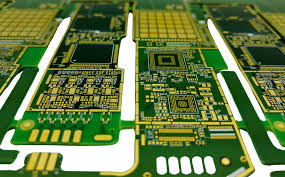
How Do Industry Standards Impact Flex Circuit Manufacturers Practices?
Incorporating pre-assembly baking in the production process for flex and rigid-flex circuit designs mitigates moisture-induced degradation and ensures that these flexible PCBs meet stringent performance standards. Furthermore, it prevents defects such as solder joint cracking and component damage.
One of the advantages of utilizing flexible circuits is the reduction in overall manufacturing costs. In comparison to a rigid PCB, flexible circuits are cheaper to produce because they don’t need to incorporate other subsidiary mechanical processes like soldering, wrapping and parts routing. Furthermore, flex circuits are much thinner and lighter which reduces assembly time.
Additionally, the use of a single material for both rigid and flex circuits allows them to be fabricated more quickly. Combined with their high-density application capabilities, this enables manufacturers to build smaller electronic devices with higher device populations and more space.
Lastly, flex circuits offer greater design flexibility and are ideal for addressing unique engineering requirements. This includes incorporating more complex dimensional tolerances, reducing weight and space limitations, improving airflow, increasing reliability, and enhancing durability.
In conclusion, the future of flex circuits is inextricably linked to the adoption of eco-friendly materials and techniques. Best FPC is leading the charge in this transition, with the development and implementation of advanced manufacturing techniques that make it possible for flexible circuits to be produced from biodegradable substrates and solvent-free adhesives. This not only eliminates harmful chemicals and waste, but it significantly cuts the cost of production. These eco-friendly materials and processes are expected to eventually become industry standard, further mitigating the environmental impact of flex circuit production.