

flex circuit pcb
Flexible circuit PCBs (flex PCBs) are designed to bend and conform to various shapes, offering significant advantages over traditional rigid PCBs in terms of versatility and space efficiency. The ability of flex PCBs to bend without damage depends on several factors, including the materials used, the design considerations implemented, and the specific conditions under which the flexing occurs. Here’s a detailed exploration of how and why flex PCBs can bend without damage.
The primary materials used in flex circuit pcb are chosen specifically for their ability to withstand bending and flexing. The substrate, usually made of polyimide or polyester, provides the necessary flexibility and durability. These materials have excellent thermal stability and mechanical properties, which allow them to bend without cracking or breaking. The copper conductors used in flex PCBs are also selected for their ductility, which helps prevent them from snapping or delaminating when the PCB is bent.
Designing a flex PCB that can bend without damage involves careful planning and adherence to specific guidelines. One critical factor is the bend radius, which is the minimum radius to which the flex circuit can be bent without causing damage. A larger bend radius reduces the stress on the copper traces and the substrate, minimizing the risk of damage. Typically, a bend radius of at least ten times the thickness of the flex PCB is recommended to ensure durability.
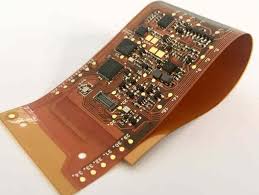
Can flex circuit pcb bend without damage?
Another important design consideration is the layout of the copper traces. Traces should be designed with smooth, curved paths rather than sharp angles, which can concentrate stress and lead to cracking. Additionally, traces should be kept away from areas of maximum bending, and distributed evenly to balance the mechanical load. The use of staggered or offset vias can also help distribute stress more evenly across the flex PCB.
The complexity of the flex PCB’s layer stack-up also affects its ability to bend without damage. Single-layer and double-sided flex PCBs are generally more flexible and easier to bend than multi-layer flex PCBs. However, multi-layer designs can be made more durable by incorporating specific design techniques, such as using thinner layers, incorporating protective coverlays, and strategically placing reinforcement materials in areas that do not require bending.
In areas where bending is not desired, or where the flex PCB must interface with rigid components, mechanical reinforcement can be added. Stiffeners, typically made from materials like FR4 or stainless steel, provide additional support and prevent excessive flexing in those regions. These reinforcements ensure that the flex PCB can handle the mechanical stresses encountered during installation and operation without suffering damage.
To ensure that a flex PCB can bend without damage, extensive testing and validation are essential. This includes mechanical stress tests such as repeated bending cycles, thermal cycling tests, and environmental exposure tests. These tests help verify that the flex PCB can withstand the expected conditions of its intended application. Testing also helps identify potential weaknesses in the design or materials that could lead to failure under stress.
Flex PCBs are used in a variety of applications where their ability to bend without damage is crucial. In consumer electronics, they are found in foldable smartphones, wearable devices, and compact cameras, where space constraints and dynamic movement are common. In medical devices, flex PCBs enable the creation of flexible and implantable devices that must endure continuous bending and flexing within the human body. Automotive and aerospace applications also benefit from flex PCBs, where they are used in environments subject to constant vibrations and mechanical stress.
Flex circuit PCBs can indeed bend without damage when designed and manufactured correctly. The key to their durability lies in the selection of appropriate materials, careful design to manage mechanical stress, and thorough testing to ensure reliability under the intended operating conditions. By adhering to these principles, engineers can harness the advantages of flex PCBs, creating innovative and reliable electronic devices that leverage the unique properties of these versatile circuits.